
Should You Buy an Orange County Home Before the End of 2026?
Yes, buying an Orange County home before the end of 2026 could make sense for the right buyer, but not because there is a universal reason everyone should buy now.
We are in Q3, and the market is giving buyers a different set of choices than we have seen during some of the most competitive years in Orange County real estate.
Inventory has increased. More listings are seeing price adjustments. Mortgage rates remain elevated. And the negotiating environment can change dramatically from one property and neighborhood to another.
If you have been thinking, “Should I buy before the end of the year, or should I wait until 2027?”, the better question may be:
What would waiting actually improve for you?
That is where the decision becomes much clearer.
Key Takeaways for Orange County Buyers
- Orange County buyers currently have more active listings to consider than they did earlier this spring.
- Mortgage rates remain one of the largest affordability challenges.
- More listings are experiencing price reductions, which can signal opportunities for buyers who understand seller motivation.
- Orange County is not one single housing market. Conditions can vary considerably by city, neighborhood, price range, property type, and condition.
- Waiting until 2027 is not automatically a better financial strategy.
- The right decision depends on your finances, timeline, lifestyle, and the specific property you are considering.
What Is Happening With Orange County Inventory in Q3 2026?
Buyers have more homes to evaluate than they did earlier in the year.
According to Realtor.com housing inventory data reported through the Federal Reserve Bank of St. Louis, Orange County had 4,544 active listings in June 2026, compared with 4,341 in May.
That is significant because more inventory gives buyers something extremely valuable:
choice.
Choice creates the ability to compare.
Instead of asking, “How quickly do I have to make an offer?” buyers may have more opportunities to ask:
- Is this home priced correctly?
- How long has it been on the market?
- Has the seller already adjusted the price?
- Are there competing offers?
- What comparable homes have actually sold for?
- Is the seller motivated?
- Are there terms beyond price that could improve the transaction?
That does not mean every Orange County home suddenly comes with negotiating leverage.
Highly desirable homes that are properly priced can still generate significant interest.
The difference is that buyers need to evaluate the individual opportunity, rather than assume that every property should be approached the same way.
More Price Reductions Could Create Buyer Opportunities
There is another number I would pay close attention to.
Orange County recorded approximately 1,648 price-reduced listings in June 2026, up from 1,404 in May and 1,278 in April.
A price reduction does not automatically mean a property is a bargain.
Sometimes it simply means the original asking price was too aggressive.
But an increase in price adjustments tells buyers something important:
some sellers are responding to the market.
This is where strategy matters.
A buyer should look beyond the new list price and understand the entire history of the property:
How long has it been available?
Has the price changed more than once?
Did a previous transaction fall through?
Has the seller purchased another property?
Is there a relocation timeline?
Is the home vacant?
How does the price compare with recent closed sales?
Those details can matter just as much as the headline asking price.
What Are Mortgage Rates Doing Right Now?
Mortgage rates remain a major factor in affordability.
As of August 13, 2026, Freddie Mac reports that the average 30-year fixed-rate mortgage is 6.67%, down slightly from 6.69% the previous week.
That is a national average and does not represent the specific rate every borrower will receive. Actual loan pricing varies based on factors including loan type, credit profile, down payment, points, property type, and lender.
For many buyers, however, the bigger question is:
Should I wait for mortgage rates to come down?
Maybe.
But there is an important tradeoff.
If rates eventually move meaningfully lower, more buyers could potentially re-enter the market.
That could increase competition for desirable Orange County homes.
Waiting for a lower rate therefore does not guarantee a better overall purchase.
You could receive a lower mortgage rate but face more competition.
You could find prices higher.
You could find fewer homes in the neighborhood you want.
Or the opposite could happen.
No one can reliably predict all three variables: rates, prices, and inventory.
That is why I would not build a home-buying decision around predicting exactly what the market will look like in 2027.
What Are Orange County Home Prices Doing?
Orange County remains an expensive housing market.
Realtor.com data reported through FRED showed a median listing price of approximately $1,372,500 in June 2026, compared with $1,395,000 in May.
Remember that a listing price is not the same thing as a closed-sale price, but it provides useful context for what sellers are asking.
More importantly, countywide averages can hide enormous differences.
A condominium in Rancho Santa Margarita behaves differently from an ocean-view home in San Clemente.
A home in Mission Viejo may have different demand drivers from a property in Dana Point.
Irvine can behave differently from San Juan Capistrano.
Newport Beach is its own market again.
Even within the same city, neighborhood, school district, lot size, view, HOA, condition, and price range can completely change the competitive environment.
That is why the question should rarely be:
“What is the Orange County market doing?”
The more useful question is:
“What is happening in the specific market where I want to buy?”
Why Q3 and Q4 Can Be Interesting for Buyers
The final months of a calendar year can create a different type of real estate opportunity.
Not because sellers suddenly become desperate when summer ends.
That would be far too broad a statement.
But seller circumstances can change.
Someone who listed in spring may have expected to be moved by summer.
A relocation deadline may be approaching.
A seller may already own their next home.
A property may have been available longer than expected.
A seller may simply decide that certainty matters more than continuing to test the market.
This is why I pay close attention to seller motivation, property history, and market time, not simply the asking price.
A strong buyer strategy is not just about finding the right home.
It is about understanding the position of the person on the other side of the transaction.
Should You Wait Until 2027?
Waiting makes sense when waiting improves your position.
That distinction matters.
You may be better served waiting if:
- Your job or income is uncertain.
- You need time to improve your credit profile.
- You want to increase your down payment or reserves.
- The monthly payment would stretch your finances too far.
- You are expecting a significant life or employment change.
- You still do not know which community fits your lifestyle.
- You are buying primarily because you feel pressured to act.
Those are legitimate reasons to wait.
But there is another type of waiting:
“I am waiting because I think homes or mortgage rates will definitely be cheaper next year.”
That is a forecast, not a strategy.
California home sales increased year over year through the first half of 2026, while the statewide median price continued to show resilience despite elevated borrowing costs.
That does not tell us what Orange County prices will do next year.
It simply reinforces why buyers should be careful about making a major life decision based entirely on an expected market prediction.
Cheryl's Buyer Decision Framework
When I work through a real estate decision, I believe clarity comes from looking at the complete picture rather than allowing one headline or one market statistic to make the decision for you.
For a buyer considering whether to purchase before the end of 2026, I would evaluate these five areas:
1. Financial Readiness
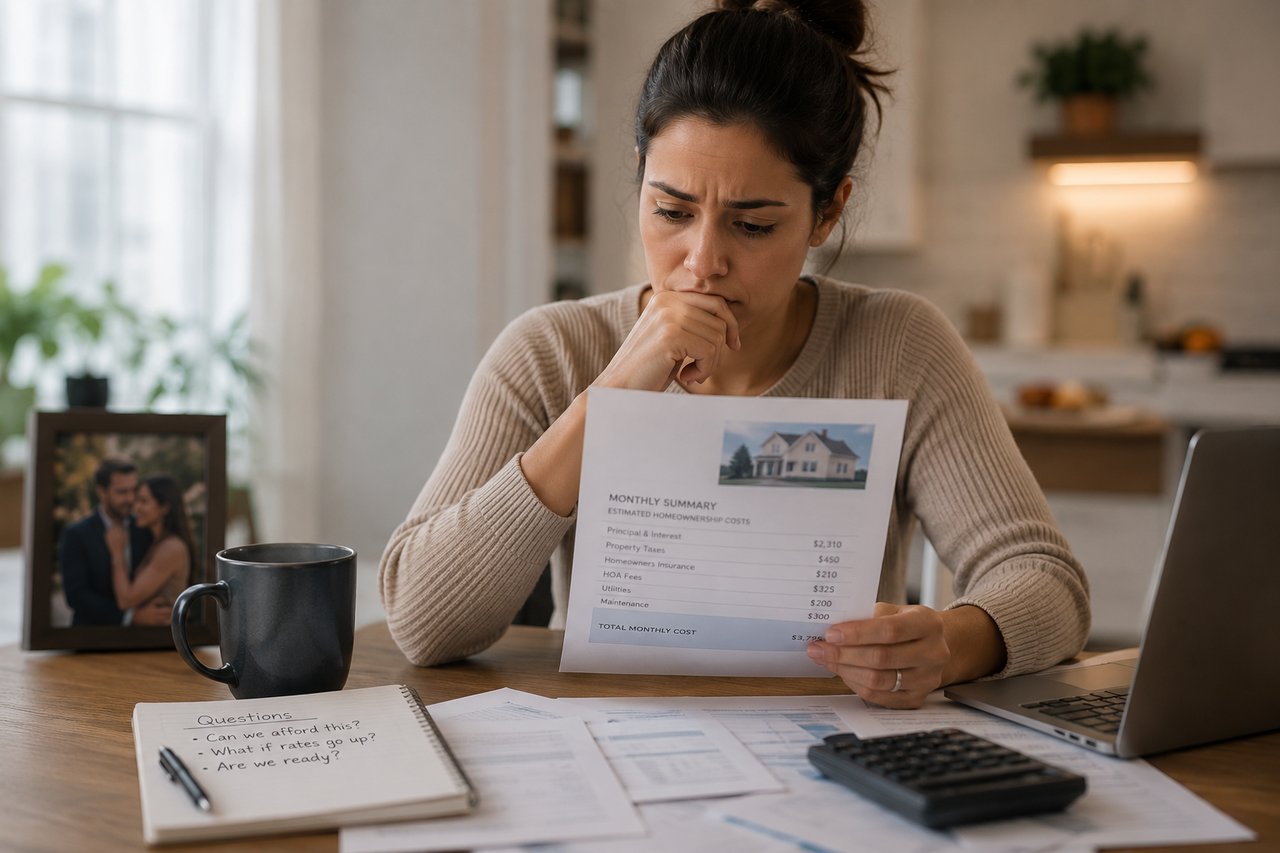
Can you comfortably afford the payment while maintaining appropriate reserves?
The maximum amount a lender will approve is not necessarily the amount you should spend.
2. Timeline
How long do you realistically expect to own the property?
A home purchase generally deserves a longer-term perspective because buying and selling both involve transaction costs.
3. Property Fit
Does this home solve the needs that caused you to begin looking in the first place?
Do not let fear of missing out turn an average property into your “perfect” home.
4. Market Position
How does this home's price compare with recent sales, competing listings, and its own market history?
This is where neighborhood-level analysis becomes extremely important.
5. Negotiating Opportunity
What matters to the seller besides price?
Sometimes the strongest opportunity is price.
Other times it may involve credits, repairs, timing, contingencies, or other transaction terms.
The One Question to Ask Before You Decide to Wait
Before deciding to postpone your purchase until 2027, write down the answer to this:
“What specifically do I expect to be better by waiting?”
Do you expect:
A lower interest rate?
A larger down payment?
Lower prices?
More inventory?
A stronger financial position?
A different job situation?
A particular neighborhood to become available?
Then take it one step further.
Ask yourself:
What happens if that change does not occur?
That simple exercise turns “waiting” into an actual strategy.
And if there is no clear answer to what you are waiting for, it may be worth looking at today's opportunities before automatically postponing your plans.
Orange County Buyer Reset: A Simple 5-Step Exercise
Before making your decision, complete these five steps:
Step 1 — Establish your comfortable monthly housing budget.
Do this before focusing on your maximum purchase price.
Step 2 — Identify your three non-negotiables.
Neighborhood, bedrooms, yard, schools, commute, view, property type, or another lifestyle priority.
Step 3 — Review actual recent sales.
Do not base your expectations solely on asking prices.
Step 4 — Identify current negotiating opportunities.
Look for market time, price reductions, competing inventory, previous transactions, and seller circumstances when known.
Step 5 — Compare buying now with waiting.
Write down what needs to improve for waiting to benefit you.
If you cannot identify it, your decision may be based more on uncertainty than strategy.
Frequently Asked Questions
Is Q3 2026 a good time to buy a home in Orange County?
It can be for a financially prepared buyer who finds the right property at the right terms. Increased inventory and the number of price-reduced listings can create opportunities, but conditions vary significantly by neighborhood and property.
Will Orange County home prices fall in 2027?
There is no reliable way to know that today. Buyers should be cautious about making a purchase decision based entirely on forecasts. Evaluate current prices, available inventory, your financial situation, and how long you expect to own the property.
Should I wait until mortgage rates come down?
Waiting may make sense if today's payment does not fit comfortably within your budget. However, lower rates could also encourage additional buyers to enter the market, so a lower future rate does not necessarily mean a less competitive purchase environment. As of August 13, 2026, Freddie Mac's national 30-year fixed average is 6.67%.
Can Orange County buyers negotiate right now?
Some can. The increase in listings with price reductions provides evidence that some sellers are adjusting expectations, but negotiating leverage depends on the individual home, location, pricing, market time, competing offers, and seller circumstances.
Which Orange County communities should buyers consider?
That depends on budget and lifestyle. Coastal markets such as San Clemente and Dana Point offer a very different housing experience from Irvine, Mission Viejo, Rancho Santa Margarita, San Juan Capistrano, or other inland Orange County communities. Start with the life you want to live and then determine which communities support it.
Is it better to buy now and refinance later?
Refinancing may be an option if rates decline and the homeowner qualifies at that time, but it should never be assumed or guaranteed when deciding whether a purchase is affordable today. A home should make financial sense based on the terms available when you purchase it.
The Bottom Line
You do not need to know exactly what the 2027 housing market will do to make a smart decision in 2026.
You need to understand the market in front of you.
We are in Q3.
Orange County buyers have more listings to evaluate than they did earlier this year. Price reductions have increased. Mortgage rates remain elevated. And opportunities vary considerably from one property to another.
For some buyers, the right strategy will be to wait.
For others, the next several months could uncover an opportunity worth pursuing.
The answer comes from combining your financial readiness, your timeline, the specific neighborhood, the property's actual value, and the negotiating position available today.
That is much more useful than trying to predict the perfect moment to buy.
Thinking About Buying in Orange County Before the End of 2026?
Before deciding whether to buy now or wait until 2027, let us look at the numbers together.
I can help you evaluate the communities you are considering, recent comparable sales, current inventory, price reductions, market time, and where negotiating opportunities may exist.
There is no pressure to buy simply because you start the conversation.
The goal is clarity first.Build My Orange County Buyer Strategy
About Cheryl Lynch
Cheryl Lynch is a Business Architect, strategic coach, real estate team leader, and Founder and CEO of The Lynch Group OC at Compass. With more than 26 years of real estate sales and leadership experience, Cheryl brings a strategic, practical approach to helping clients navigate changing markets and make informed real estate decisions.
California DRE #01314572
SOURCE & METHODOLOGY NOTE
Market information in this article was reviewed using current data available as of August 13, 2026. Sources include Freddie Mac's Primary Mortgage Market Survey, California Association of REALTORS® market reporting, and Realtor.com housing inventory data published through the Federal Reserve Bank of St. Louis. Market conditions can change quickly, and countywide statistics may not reflect individual Orange County neighborhoods or properties.
Disclaimer: This article is provided for general educational purposes and is not financial, tax, legal, lending, or investment advice. Buyers should consult appropriate licensed professionals regarding their individual circumstances.