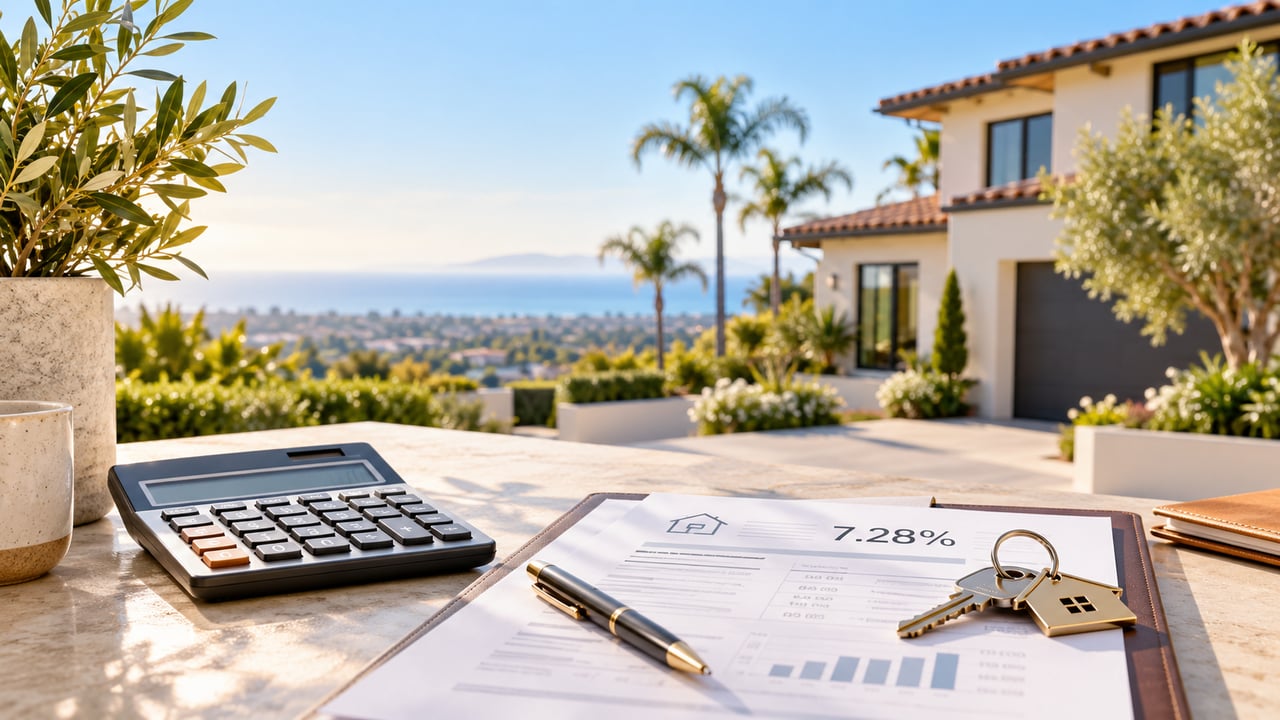

Mortgage Rates Just Jumped to 7.28%—What Does That Mean for Orange County Real Estate?
Mortgage rates moved sharply higher this week, and if you are thinking about buying or selling a home in Orange County, that number deserves your attention.
Freddie Mac reported that the average 30-year fixed mortgage rate reached 7.28% on October 1, 2026, up from 7.03% just one week earlier. CNBC reported that the quarter-point weekly increase was the largest in four years. CNBC
That does not mean the Orange County market suddenly stops.
It does mean affordability changes, buyers become more selective, and sellers need to be more thoughtful about price, presentation, and negotiation.
The most important thing to understand is this:
Higher rates do not create one uniform market. They create different opportunities and pressures depending on the property, price range, financing, and seller motivation.
Key Takeaways
- The average 30-year fixed mortgage rate is now 7.28%.
- Higher rates reduce purchasing power for financed buyers.
- Orange County home prices remain relatively strong despite higher borrowing costs.
- Buyers may gain more negotiating leverage on homes that sit longer.
- Sellers need to price according to current buyer behavior, not last year’s market.
- Rate buydowns, seller credits, and financing structure may become more important negotiation tools.
- Cash buyers and buyers with larger down payments may be less affected by rate changes.
Why Did Mortgage Rates Jump?
Mortgage rates are influenced by a combination of inflation expectations, Treasury yields, economic growth, Federal Reserve policy, and investor expectations.
CNBC has recently reported that higher Treasury yields and inflation concerns have been pushing borrowing costs higher. In September, the 10-year Treasury yield moved above 4.9%, a level that placed additional upward pressure on mortgage pricing. CNBC
Freddie Mac’s October 1 survey now shows:
- 30-year fixed: 7.28%
- 15-year fixed: 6.60%
A year ago, the 30-year fixed rate averaged 6.34%. CNBC
That difference has a very real impact on monthly payments.
What Does 7.28% Mean for an Orange County Buyer?
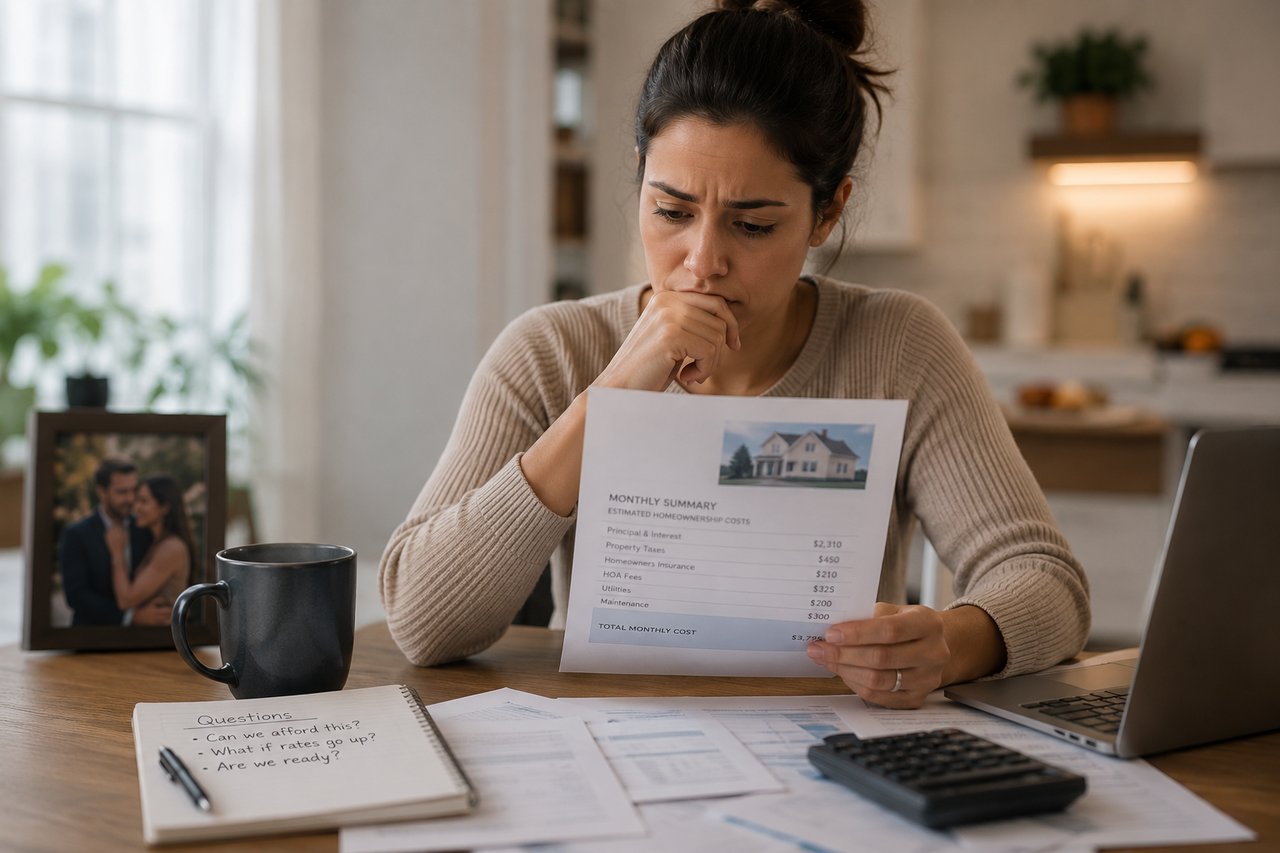
At Orange County price points, even a small change in interest rate can have a meaningful effect on the monthly payment.
For example, if a buyer finances $1,000,000:
At 6.50%, principal and interest would be approximately $6,321 per month.
At 7.28%, principal and interest would be approximately $6,843 per month.
That is a difference of roughly $522 per month, before property taxes, insurance, HOA dues, or other ownership costs.
Over a year, that is more than $6,000 in additional payments.
That is why buyers often feel rate changes more strongly than price changes.
A $20,000 reduction in purchase price may sound substantial, but a lower mortgage rate or seller credit may sometimes produce a greater monthly benefit.
Are Buyers Going to Stop Buying?
No.
But some buyers may adjust.
They may:
- Lower their price range
- Increase their down payment
- Ask for seller credits
- Consider rate buydowns
- Look at different neighborhoods
- Compare monthly costs more carefully
- Become more selective about condition
- Delay a purchase
- Choose a smaller property
At the same time, other buyers may decide to move forward because they have a life reason to buy.
People still:
- Relocate
- Get married
- Have children
- Divorce
- Retire
- Change jobs
- Need more space
- Downsize
- Invest
Real estate decisions are not driven by mortgage rates alone.
What Is Happening in Orange County Right Now?
Despite elevated mortgage rates, Orange County home values have remained relatively resilient.
Realtor.com reported that in September 2026:
- Median listing price: $1,299,000
- Median sold price: $1,225,000
- Median sold price change year over year: +5.15%
- Active listings: approximately 8,078
- Median days on market: 51 days
- Average sale-to-list ratio: approximately 99% Realtor
Redfin separately reported that over the three months ending August 2026, Orange County’s median sale price was approximately $1.22 million, up 3.9% year over year. Redfin
So while borrowing costs are high, the data does not currently show a broad collapse in Orange County home prices.
What it does show is a market where buyers are paying close attention to value.
Higher Rates Make Pricing More Important
When mortgage rates rise, buyers become more sensitive to the total cost of ownership.
That means sellers cannot simply rely on appreciation or low inventory to justify an aggressive price.
Buyers may compare:
- Purchase price
- Monthly mortgage payment
- Property taxes
- Insurance
- HOA dues
- Mello-Roos
- Repair costs
- Renovation expenses
- Competing properties
A home that feels slightly overpriced at 6% may feel much more expensive at 7.28%.
That is why correct pricing becomes even more important in a higher-rate environment.
Not Every Orange County Market Is Behaving the Same Way
Countywide statistics are useful, but Orange County is made up of very different micro-markets.
A coastal luxury property in Newport Beach behaves very differently from a condominium in Rancho Santa Margarita.
For example, Realtor.com reported that Newport Beach’s September 2026 median sold price was approximately $3.275 million, while the city of Orange was approximately $1.116 million. Realtor
Different price points also attract different financing profiles.
A buyer purchasing a $700,000 condominium may be highly sensitive to a quarter-point rate move.
A buyer purchasing a $5 million property with substantial cash may be much less affected.
That is why the headline rate does not tell the entire story.
What Higher Rates Mean for Sellers
The biggest change for sellers is not necessarily lower prices.
It is more selective buyers.
Homes that are:
- Well priced
- Well presented
- Properly marketed
- Easy to show
- In desirable locations
- Updated or clearly positioned
can still attract strong activity.
Homes that are overpriced, dated, poorly marketed, or difficult to show may sit longer.
The current Orange County median days on market is about 51 days, according to Realtor.com. Realtor
That makes the first few weeks on market especially important.
Should Sellers Lower Their Price Because Rates Increased?
Not automatically.
A rate increase does not mean every home needs a price reduction.
Instead, sellers should monitor:
- Showing activity
- Online views
- Saved searches
- Buyer feedback
- Competing listings
- Pending sales
- Price reductions nearby
- Offers received
If buyer activity drops materially after a rate increase, pricing strategy may need to be revisited.
But reducing the price without first understanding the problem can cost the seller money unnecessarily.
Seller Credits May Become More Valuable
This is where negotiation can become creative.
A seller might have two choices:
Option A:
Reduce the price by $20,000.
Option B:
Offer a $20,000 seller credit that the buyer may be able to use toward eligible closing costs or a rate buydown.
Depending on the loan structure, the second option may have a larger effect on the buyer’s monthly payment.
That does not mean seller credits are always better.
It means both sides should run the numbers.
What Is a Mortgage Rate Buydown?
A rate buydown allows money to be used to reduce the buyer’s mortgage cost.
There are two common concepts.
Permanent Buydown
The buyer or seller pays discount points at closing to obtain a lower interest rate for the life of the loan.
Temporary Buydown
Funds are used to reduce the effective payment for the first one or more years.
One common structure is a 2-1 buydown, where the payment is based on a rate two percentage points below the note rate in year one and one percentage point below in year two.
Loan rules vary, so buyers should always review options with their lender.
Buyers Should Negotiate the Whole Transaction
In a higher-rate environment, buyers should not focus exclusively on price.
Negotiation can include:
- Seller credits
- Closing costs
- Rate buydowns
- Repairs
- Termite work
- Appliances
- Closing date
- Possession
- HOA items
- Inspection issues
The strongest outcome may not always be the lowest purchase price.
It may be the structure that produces the best overall financial result.
Should Buyers Wait for Rates to Come Down?
This is the question I hear constantly.
The challenge is that no one can guarantee where mortgage rates will go next.
Rates may fall.
They may stay elevated.
They may rise further.
CNBC noted that earlier forecasts expected mortgage rates to settle closer to the low-6% range by year-end, but geopolitical and inflation pressures pushed rates in the opposite direction. CNBC
Waiting for the perfect rate can therefore create another risk:
The market may change while you wait.
Home prices may rise.
Competition may increase.
Inventory may shrink.
The property you wanted may sell.
The right decision depends on your financial position, timeline, and long-term goals.
If Rates Fall Later, Can You Refinance?
Possibly.
Many buyers purchase with the expectation that they may refinance if rates eventually decline.
But refinancing is not guaranteed.
It depends on:
- Future rates
- Property value
- Credit
- Income
- Loan balance
- Closing costs
- Lending standards
Buyers should be comfortable with the payment they are accepting today rather than relying entirely on a future refinance.
What Higher Rates Mean for Investors
Investors may also feel the impact.
Higher financing costs can affect:
- Cash flow
- Cap rates
- Debt-service coverage
- Return calculations
- Rental pricing
- Property selection
At the same time, reduced buyer competition may create opportunities for investors who have strong liquidity or access to alternative financing.
Again, the rate itself is only one part of the decision.
Should Sellers Wait for Rates to Drop Before Listing?
Not necessarily.
Waiting has costs too.
Sellers may face:
- Mortgage payments
- Property taxes
- Insurance
- Maintenance
- HOA dues
- Opportunity cost
- Delayed relocation
If rates eventually fall, more buyers may enter the market—but more sellers may also list.
That could increase competition.
The better question is:
Does selling now support your personal and financial plan?
What Should Orange County Buyers Do Right Now?
Buyers should focus on five things.
1. Recalculate Your Comfortable Payment
Do not use a payment estimate from three months ago.
Run today’s numbers.
2. Speak With Your Lender About Rate Options
Ask about:
- Discount points
- Temporary buydowns
- ARM options
- Seller-credit limits
- Loan-program alternatives
3. Look for Properties With Negotiating Leverage
Homes with longer market time may provide opportunities.
4. Compare the Total Cost
Do not compare purchase price alone.
5. Stay Ready
Well-priced homes can still move quickly.
What Should Orange County Sellers Do Right Now?
Sellers should focus on:
- Accurate pricing
- Strong presentation
- Professional photography
- Flexible showing access
- Clear marketing
- Buyer feedback
- Competitive analysis
- Financing incentives where appropriate
Higher rates make strategy more important.
They do not make selling impossible.
Frequently Asked Questions
What is the current mortgage rate?
Freddie Mac reported an average 30-year fixed mortgage rate of 7.28% as of October 1, 2026. Freddie Mac
Are Orange County home prices falling because of higher rates?
Not broadly. Realtor.com reported the median sold price up 5.15% year over year in September 2026, while Redfin reported a 3.9% year-over-year increase over the three months ending August. Realtor
Is 7% too high to buy a house?
There is no universal threshold. Buyers should evaluate the payment, property value, long-term plans, income stability, cash reserves, and financing options.
Can a seller pay to lower my mortgage rate?
In some transactions, a negotiated seller credit may be used toward eligible discount points or a temporary rate buydown, subject to lender and loan-program requirements.
Should I wait until rates drop?
That depends on your circumstances. Waiting may produce a lower rate, but prices, inventory, competition, and your personal situation may also change.
Do Not Let One Headline Make the Decision for You
A 7.28% mortgage rate matters.
It affects affordability.
It affects buyer behavior.
It affects negotiation.
But it does not automatically tell you whether you should buy, sell, wait, or move.
The real question is:
What does this rate mean for your specific situation?
That is where strategy matters.
Thinking About Buying or Selling in Orange County?
If rising mortgage rates have changed your plans—or you are unsure whether they should—The Lynch Group can help you look at the numbers before you make a decision.
Cheryl Lynch and The Lynch Group OC help buyers and sellers evaluate pricing, financing, timing, negotiation, and current Orange County market conditions so they can make decisions based on strategy rather than headlines.
Suggested CTA Button:
Build My Real Estate Strategy
About Cheryl Lynch
Cheryl Lynch is the Founder and CEO of The Lynch Group OC at Compass. With more than 26 years of Southern California real estate experience, Cheryl helps buyers and sellers evaluate market conditions, understand financing and negotiation options, position properties strategically, and make confident real estate decisions.
California DRE #01314572
Sources and Methodology
This article was inspired by CNBC’s October 1, 2026 coverage of rising mortgage rates and their effects on the housing industry. The linked CNBC video itself was not fully accessible through the web interface available to me, so I did not rely on any specific claims from the video beyond its stated topic. Current mortgage-rate figures were independently verified through Freddie Mac and CNBC Select. Orange County market statistics were reviewed using Realtor.com and Redfin data. CNBC
Mortgage rates, loan programs, market conditions, and property values change frequently. Buyers should obtain current financing information directly from a qualified lender.
This article provides general real estate information and should not be considered lending, legal, tax, or financial advice.