Are Home Prices Dropping in Orange County, CA?
If you have been watching the Orange County housing market lately, you may be seeing what looks like conflicting information.
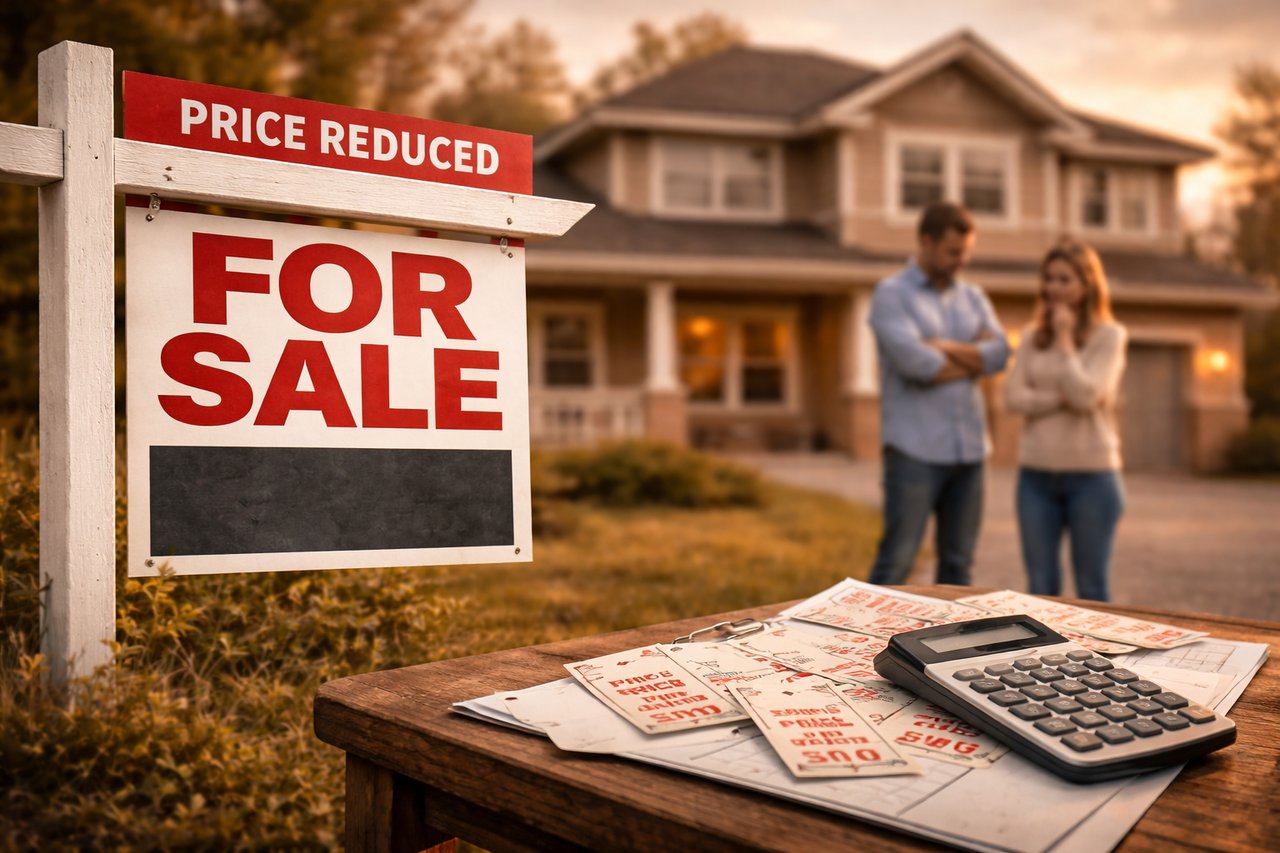
Some listing prices are coming down.
Some homes are sitting longer.
Some sellers are reducing their asking prices.
Yet countywide sale prices are still higher than they were a year ago.
So, are Orange County home prices actually dropping?
The short answer is: not broadly.
What is happening instead is a market that is becoming more selective. Asking prices have softened, buyers have more choices, and some sellers are adjusting. But the latest countywide data still shows sold prices holding above last year’s levels.
That distinction matters whether you are thinking about selling, buying, or simply trying to understand what your home may be worth today.
Key Takeaways
- Orange County’s median listing price was down 3.78% year over year in August 2026.
- Orange County’s median sold price was up 5.51% year over year in the same Realtor.com data.
- Redfin separately reported a countywide median sale price of approximately $1.23 million over the three months ending July, up 3.2% from the previous year.
- Buyers currently have more choice and are more willing to compare homes carefully.
- Some Orange County communities are appreciating while others are experiencing price softness.
- Pricing, condition, location, and property type matter far more now than simply placing a home on the market and expecting appreciation to do the work.
Are Orange County Home Prices Actually Falling?
The latest numbers tell two different stories depending on which price you are looking at.
According to Realtor.com’s August 2026 Orange County market data:
- Median listing price: $1,349,500
- Year-over-year change in listing price: -3.78%
- Median sold price: $1,245,000
- Year-over-year change in sold price: +5.51%
- Active listings: approximately 8,294
- Median days on market: 48 days
- Average sale-to-list ratio: approximately 99%
Redfin’s most recent countywide data, covering the three months ending July 2026, showed a median sale price of approximately $1,228,410, up 3.2% year over year, with homes selling in a median of 43 days.
So no, the data does not currently show a broad Orange County price collapse.
What it does show is a shift in seller expectations.
Sellers are becoming more realistic with their asking prices while buyers remain willing to pay strong prices for the right homes.
Why Are Asking Prices Dropping While Sold Prices Are Still Rising?
This is one of the most important parts of the current market.
A listing price is what a seller hopes to receive.
A sold price is what a buyer actually agrees to pay.
When listing prices decline while sold prices remain relatively strong, it often means sellers are entering the market with more realistic expectations than they did a year ago.
It can also mean that overpriced homes are being forced to adjust while well-positioned properties continue to sell successfully.
That creates a healthier gap between:
“What I hope my home is worth”
and
“What qualified buyers are actually willing to pay.”
For sellers, this makes accurate pricing increasingly important.
For buyers, it means there may be more opportunities to negotiate—but not necessarily on every property.
More Inventory Is Giving Buyers More Choices
Orange County had approximately 8,300 active listings in August 2026, according to Realtor.com. That inventory level is significantly higher than it was several years ago, even though the year-over-year change was fairly flat.
More choices change buyer behavior.
When buyers only have three reasonable homes to choose from, they may compromise quickly.
When they have ten, they become much more selective.
They begin comparing:
- Condition
- Location
- Lot size
- Upgrades
- HOA dues
- Insurance costs
- Property taxes
- Mello-Roos
- Floor plan
- Outdoor space
- View
- Parking
- Price history
This is one reason homes that are overpriced or poorly presented can sit while nearby properties sell.
The market is not necessarily rejecting the neighborhood.
It may be rejecting the specific value proposition of the property.

Mortgage Rates Are Still Affecting Affordability
Mortgage rates remain an important part of the story.
Freddie Mac reported that the average 30-year fixed mortgage rate was 6.71% as of September 3, 2026, compared with 6.50% one year earlier.
At Orange County price points, even relatively small rate changes can materially affect monthly payments.
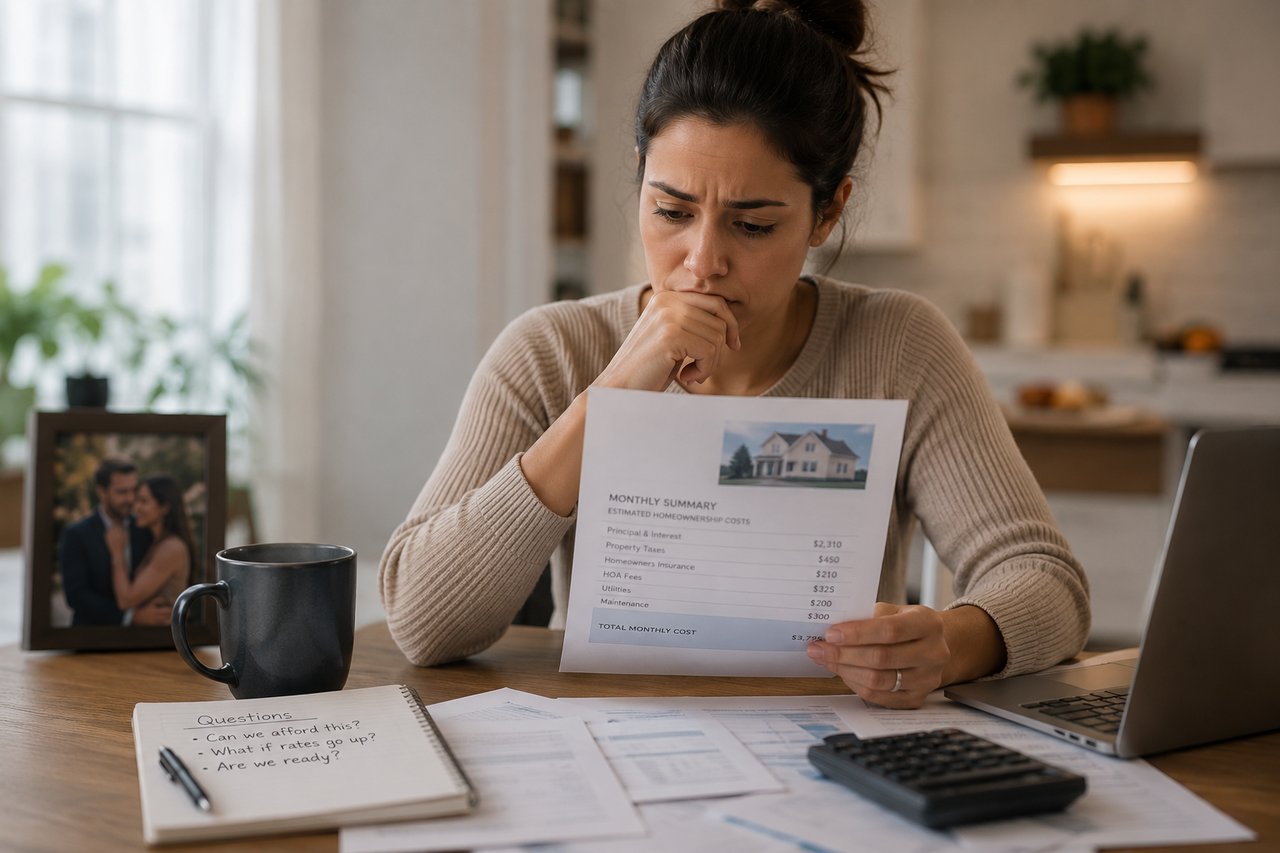
That means buyers are increasingly looking at the complete ownership cost rather than simply the purchase price.
They may evaluate:
- Mortgage payment
- Property taxes
- Insurance
- HOA fees
- Special assessments
- Repair costs
- Renovation expenses
- Energy costs
A buyer may still love a property, but the numbers need to make sense.
That is contributing to greater price sensitivity.
Orange County Is Not One Housing Market
This is where countywide statistics can become misleading.
Orange County is really a collection of dozens of micro-markets.
Even communities only a few miles apart can behave very differently.
Consider these recent Redfin figures for the three months ending July 2026:
Community | Median Sale Price | Year-over-Year Change |
|---|---|---|
Irvine | $1.52M | -4.7% |
Mission Viejo | $1.22M | +1.0% |
San Clemente | $1.85M | +3.0% |
Newport Beach | $3.96M | +7.0% |
Rancho Mission Viejo | $1.27M | +9.0% |
That is a very wide range.
One city is showing year-over-year softness while another is showing significant appreciation.
And even those citywide numbers can hide dramatic differences between individual neighborhoods.
For example, Redfin reported Talega’s median sale price up sharply year over year over the same three-month period. At the same time, other smaller San Clemente submarkets showed materially different results.
This is why I would never advise a homeowner to make a pricing decision based solely on an Orange County headline.
The real question is:
What is happening with homes like yours, in your immediate competing market?
Which Homes Are Seeing Price Reductions?
Price reductions tend to occur when the market perceives a mismatch between price and value.
That mismatch can come from several places.
The home was priced ahead of the market
Some sellers still price based on where values were heading several years ago rather than where buyer demand is today.
That strategy becomes riskier when buyers have alternatives.
The condition does not justify the price
A dated home can absolutely sell well.
But it must be priced relative to what the buyer will need to spend after closing.
Buyers increasingly calculate renovation costs into their decision.
The home has a difficult location or functional issue
Road noise, unusual floor plans, steep lots, limited parking, aging systems, or deferred maintenance may be tolerated when inventory is extremely tight.
As inventory grows, buyers may expect a price adjustment for those compromises.
The marketing is weak
Poor photography, limited exposure, clutter, difficult showing access, and ineffective positioning can reduce demand even when the underlying property is desirable.
The seller missed the strongest initial pricing window
The first days on market are important because that is when the property reaches the largest group of current buyers.
If the price is materially too high during that period, buyers may move on before the seller adjusts.
Are Buyers Finally Getting More Negotiating Power?
In some cases, yes.
But negotiating power depends on the property.
Realtor.com reported that Orange County homes sold at approximately 99% of asking price on average in August 2026. That suggests sellers are still retaining significant pricing strength overall.
However, a property that has:
- Been listed for 45 or 60 days
- Had multiple price reductions
- Fallen out of escrow
- Received limited showing activity
- Needed significant repairs
- Faced strong nearby competition
may give a buyer considerably more leverage than a newly listed, well-priced home.
The mistake buyers sometimes make is assuming the entire county has suddenly become negotiable.
It has not.
The better strategy is to identify which properties are creating negotiating opportunities.

Should Sellers Be Worried About Falling Prices?
Not necessarily.
But sellers should pay attention to changing buyer behavior.
The market is asking sellers to be more precise.
Several years ago, broad appreciation could compensate for aggressive pricing.
Today, buyers are more likely to notice the difference between a correctly positioned home and one that is simply testing the market.
For sellers, this means:
- Pricing should reflect current competition
- Preparation matters
- Photography matters
- Showing access matters
- Condition matters
- Buyer feedback matters
- The first weeks on market matter
It does not mean sellers should automatically discount their homes.
It means the strategy must match the market.
What Should You Do If You Are Thinking About Selling?
Start with a property-specific analysis.
Do not begin with:
“What is the Orange County median?”
Begin with:
- Which homes recently sold nearby?
- Which listings are currently competing with mine?
- Which properties went pending?
- Which homes reduced their prices?
- How long did comparable homes take to sell?
- What condition were they in?
- Did they have views, pools, larger lots, or upgrades?
- What concessions were involved?
- How does my home compare?
Those questions tell you much more than a countywide average.
A seller may discover that their particular segment remains extremely competitive even though the broader market appears softer.
Or the opposite may be true.
What Should Buyers Do Right Now?
Buyers should use the market shift to become more strategic rather than simply waiting for a crash.
That may mean looking for:
- Homes with longer market time
- Listings that have already reduced their price
- Properties that fell out of escrow
- Homes with cosmetic issues
- Sellers with flexible terms
- Opportunities for credits or financing concessions
But buyers should still be prepared to compete when the right home is priced well.
In desirable Orange County neighborhoods, strong properties can still move quickly.
Could Orange County Prices Fall More This Fall?
They could soften in some segments.
Real estate is seasonal, and fall typically brings fewer buyers than spring.
Mortgage rates also remain elevated, which can limit affordability.
However, predicting a broad countywide decline is difficult because Orange County continues to have long-term supply constraints, strong employment centers, highly desirable coastal and suburban communities, and limited availability of certain housing types.
The more realistic expectation is probably continued variation.
Some neighborhoods may soften.
Some may remain flat.
Others may continue appreciating.
That is why micro-market analysis matters.
What Does This Mean for Homeowners Planning to Sell in the Next 6–12 Months?
If you are not selling immediately, you still have an opportunity to prepare.
Use the time to evaluate:
- Maintenance
- Repairs
- Paint
- Landscaping
- Staging
- Insurance issues
- Deferred improvements
- Equity
- Mortgage balance
- Tax considerations
- Your next move
You can also begin tracking your neighborhood before you are ready to list.
Watch:
- New listings
- Price reductions
- Pending sales
- Closed sales
- Days on market
That gives you a much clearer picture of the market when your time comes.
Frequently Asked Questions
Are Orange County home prices going down in 2026?
Countywide asking prices have softened, but sold prices remain higher than they were a year ago. Realtor.com reported August median listing prices down 3.78% year over year while median sold prices were up 5.51%.
Is Orange County becoming a buyer’s market?
Not countywide. Realtor.com still classified Orange County as a seller’s market in August 2026, with homes selling at approximately 99% of asking price on average. Individual cities, neighborhoods, and price ranges may behave differently.
Are sellers reducing prices more often?
Some are, particularly where the original asking price did not match current buyer expectations. Price reductions are becoming more visible as buyers gain more choices.
Should I wait to sell if prices are softening?
That depends on your property, financial position, timing, and local competition. A property-specific market analysis is more useful than trying to time the entire Orange County market.
Should buyers wait for prices to fall further?
Waiting carries its own risks. Prices could decline in some segments, remain flat, or rise in others. Mortgage rates may also change. Buyers should evaluate the payment, property value, negotiating leverage, and long-term plans together.
The Real Question Is Not Whether Orange County Prices Are Dropping
The more useful question is:
What is happening to the value of your specific home—or the type of home you want to buy?
Orange County remains a highly segmented market.
A headline may say prices are up.
Another may say asking prices are down.
Both can be true.
What matters is:
- Your city
- Your neighborhood
- Your price range
- Your property type
- Your condition
- Your competition
- Your timing
That is where the real answer lives.
Want to Know What Your Orange County Home Is Worth Right Now?
If you are considering selling—or simply want to understand how the market shift may be affecting your equity—The Lynch Group can prepare a property-specific market review based on current competition, recent sales, condition, location, and buyer activity.
The goal is not to give you a generic automated estimate.
It is to help you understand where your home actually fits in today’s market.
Suggested CTA button:
Request My Home Value Review
About Cheryl Lynch
Cheryl Lynch is the Founder and CEO of The Lynch Group OC at Compass. With more than 26 years of Southern California real estate experience, Cheryl helps homeowners evaluate value, prepare strategically, position properties effectively, and make informed decisions about when and how to sell.
California DRE #01314572
Sources and Methodology
Orange County countywide market statistics were reviewed using Realtor.com Economic Research and Redfin data based on MLS-listed properties, MLS data, and public records. City-level examples were reviewed using Redfin’s three-month market calculations through July 2026. Mortgage-rate information was sourced from Freddie Mac’s Primary Mortgage Market Survey as of September 3, 2026.
Market statistics change frequently and should not be used as a substitute for a property-specific analysis.